Zoe was 28 years old when she was diagnosed with Stage 1 triple negative breast cancer (TNBC) in August 2024.
Her connection to hereditary cancer risk had been on her radar for some time. When she was 22, after her mother was diagnosed with ovarian cancer and tested positive for the BRCA1 gene mutation, Zoe decided to get tested herself. “I live in Melbourne, so I was referred to the Peter MacCallum Familial Cancer Centre. That’s where I found out I was BRCA1 positive too,” she says.
For the next six years, she followed a close risk management plan through Peter Mac, with annual MRIs, physical exams, and ongoing discussions about her options. Her surgeon advised that once she’d completed her family, a risk-reducing double mastectomy would be something to seriously consider.
In August 2023, Zoe’s MRI was clear. Just weeks later, she discovered she was pregnant with her first child. After welcoming her daughter in April 2024, she wasn’t breastfeeding, so when Peter Mac called to offer a last-minute MRI appointment, she accepted. That decision would turn out to be lifesaving.
The MRI showed a small area of concern, a non-mass enhancement. “They said it’s common to see breast changes after breastfeeding, but I hadn’t breastfed,” Zoe recalls. A biopsy confirmed what she feared: triple negative breast cancer. Small. 13mm, but aggressive.
The next few days were a blur of decisions. Surgery was scheduled for the following week.
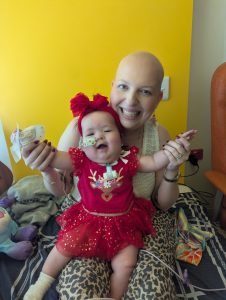
During this time, Zoe’s life was already full of challenges. Her newborn daughter had been hospitalised since birth with a rare neurological condition, requiring round-the-clock care. Between daily hospital visits and navigating her own diagnosis, Zoe asked for telehealth appointments wherever possible. “The hospital was an hour away. Everything was just overwhelming,” she says.
Fertility preservation needed an immediate answer and Zoe, thinking of her daughter’s high care needs and her family’s genetic risks, decided not to pursue it.
Zoe underwent surgery—a wide local excision and sentinel node biopsy—and received the relieving news that the cancer had not spread to her lymph nodes.
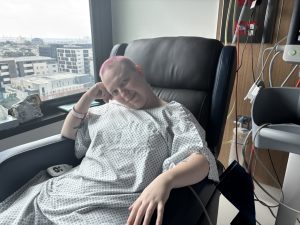
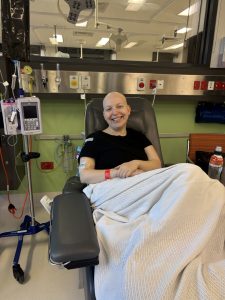
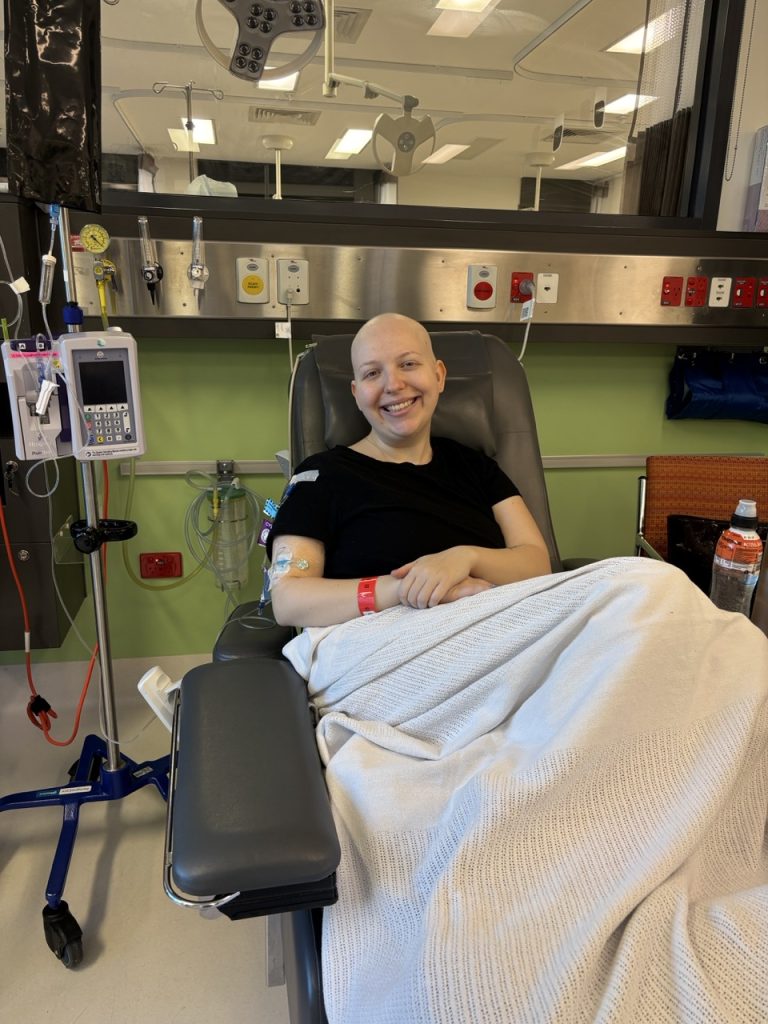
Chemotherapy began soon after: four cycles of TC (docetaxel and cyclophosphamide), each three weeks apart. The first cycle was brutal. “I spent days three to five in bed, unable to lift my head, not because of nausea, but from physical pain from head to toe.”
Wanting to help her loved ones understand how to support her, Zoe developed a “chemo routine” that became something of a guide: Chemo day itself was a “full of beans” day, boosted by steroids and coffee. The day after chemo, she pushed through to spend time with her daughter before retreating into what she called her “chemo cave.” Days three to five were the hardest (“non-verbal, exhausted, in pain, and hopeless”) but by day six, she would usually start to feel glimpses of herself returning.
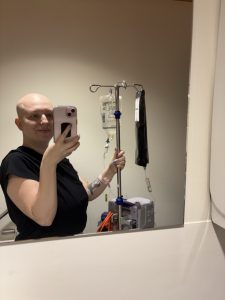
After her first cycle, Zoe made small but important changes. She opted for a PICC line to spare herself the stress of multiple cannulas and started drinking large amounts of water before each infusion, a tip she picked up from an online support group that helped ease some of the intense side effects.
Each cycle took a heavier toll. By the third round, she could barely manage stairs and needed help getting from the hospital car park to her daughter’s bedside. “I felt absolutely useless,” she says. But she pushed on, holding onto small victories wherever she could find them.
Her final cycle was the hardest, leading to a hospital admission. But somehow, even in her lowest moments, Zoe kept moving forward, fuelled by the knowledge that she was almost at the end of this chapter.
Six weeks later, she underwent a double mastectomy with DIEP flap reconstruction. It involved nine hours of surgery, followed by six days in hospital. Her greatest fear wasn’t the procedure itself but what the pathology might reveal. Her surgeon called to say the words she had been desperate to hear: “All the tissue was benign.”
Today, twelve weeks post-surgery, Zoe is slowly feeling stronger: it’s been a gradual improvement. Her husband says he can tell she’s returning to ‘herself’ again because she has some energy “to do additional things, like hobbies, reading, speaking to friends and family on the phone, rather than just surviving.” The emotional recovery, however, is an ongoing process. “I think it’s almost harder once you’re deemed ‘cancer free.’ The calls and messages slow down, but you’re still carrying so much.”
Through it all, Zoe has leaned on her husband, who stepped into every role she needed without hesitation, and stayed honest and open with her friends and family about how she was really feeling. She credits her psychologist, online support groups, and the small community she found through sharing her journey on TikTok for keeping her grounded.
Her advice to others facing a new diagnosis is simple but powerful: “Breathe. Take it one day at a time. Let your feelings out. Find support. And remember everything you’re feeling is normal. You will get through this.”