Leanne’s Story: Shock, Sarcasm and the Strength to Keep Moving

Our TNBC Blog Leanne feature

In May 2022, life was good for Leanne. She was 38, ‘textbook healthy’: active, eating a good-ish diet, getting good-ish sleep, exercising regularly and hadn’t even had COVID. Cancer wasn’t something on her radar.

While showering after a gym session, she felt a lump just to the left of her right underarm. At first, she dismissed it. “I thought it was a stubborn cyst,” she says. “I’d had cystic acne before and thought it’d settle after three to five weeks. It didn’t.” Six weeks later, the lump was still there. She booked an appointment with her GP—a decision that would change everything.

A contrast mammogram, ultrasound and biopsies followed. During her biopsy appointment, while still lying half-dressed and bleeding from the procedure, the radiologist looked down his microscope and delivered the news: “I’m 99.99% sure it’s breast cancer, but I hope I’m wrong. Get dressed and call your GP. Good luck.” Then he left the room.
Our TNBC Blog Leanne 1

The sonographer stood there, white as a sheet. Leanne wasn’t sure who was more shocked. After a few seconds of frozen silence, the sonographer shifted into ‘saviour mode’ helping her clean up, handing over a list of breast surgeons, ushering her out, and wishing her “good luck” once more on the way out.

It was triple negative breast cancer (TNBC), something Leanne had never heard of until that day. “I thought breast cancer was just… breast cancer,” she says. “One type. One treatment.” But TNBC is different: more aggressive, more likely to spread, and with fewer treatment options. As Leanne now describes it “TNBC is cancer’s wild card.”

Her tumour was 12mm. Just over the line where “full treatment” is recommended. That meant 20 weeks of chemotherapy, a lumpectomy, and 36 rounds of radiation. “Normally it’s 24, but because I was under 40, I got the bonus 12. Like a loyalty card: buy one tumour, get 12 burns free.”

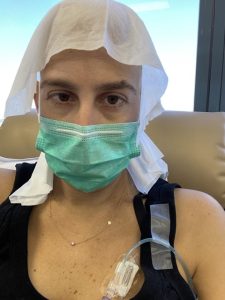
The month that followed her diagnosis was a whirlwind: GP, breast surgeon, fertility specialist, oncologist, egg retrieval, port insertion, first chemo session, all within about four weeks. “It was overwhelming,” she says. “Needles, scans, paperwork. Every checklist item seemed to involve a needle.”

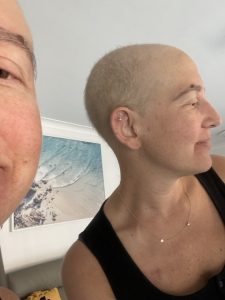
Chemo was brutal, but it wasn’t even the hardest part. Losing her hair hit her harder than she expected. Coming from a family where thick hair was practically a birthright, the emotional impact was enormous. “You don’t realise how much of your identity is tied to hair until it’s gone,” Leanne says. Hair, eyebrows, eyelashes all fell away.

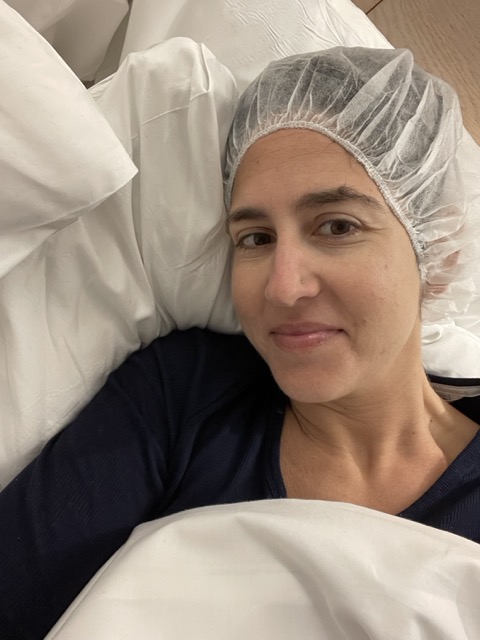
She wore scarves, not wigs, and tried to avoid mirrors. She slept in disposable shower caps to catch the shedding hair (“Top tip: don’t even look inside. Just throw it away.”) Eyelashes and eyebrows clung on longer, but eventually abandoned ship too, some even falling out on the day she received her post-surgery results.

Despite everything, Leanne kept moving. Some days it was a short walk to the end of the street. Some days to the post box. “Movement saved me,” she says. It became a way to push back against the feeling that cancer was taking everything.

Her Sydney “village”—family, cousins, friends—carried her through the worst moments. Support came in meals left at the door, lifts to chemo, silent company when she couldn’t speak. It came in texts, hugs, and the simple act of not being left to sit alone in the hardest parts.

The medical system handled the treatment side well. Her breast care nurse and chemo nurses took the lead, and Leanne quickly learned to say yes to whatever they suggested. “If they said jump 10 times, I said yes ma’am. This was not my domain.”

The hard parts weren’t always medical. Therapy, finances, identity: those were the battles Leanne had to face largely on her own. “Cancer is very isolating,” she says. “Fatigue is not your friend.”

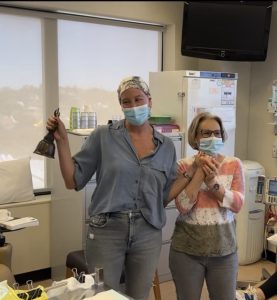
But she made it through treatment. And despite everything cancer took—her hair, energy, plans, and certainty—it didn’t take her ability to laugh when crying felt too exhausting. It didn’t take away her resilience, or her deep stubbornness to keep living, even when the road ahead looked nothing like what she had planned.

There’s no clean ending. No neat bow tied around the experience. But there is life. Leanne is still here; walking, moving, laughing (with occasional sarcasm) and refusing to let cancer define her.

Because while cancer changed her, it didn’t get the last word.
Our TNBC Blog Leanne 2 Our TNBC Blog Leanne 3 Our TNBC Blog Leanne 4 Our TNBC Blog Leanne 5

Stage Selector

This site is tailored to meet you where you are, offering practical resources, personal stories, insights, and more—all in one easy-to-navigate space. By choosing the stage relevant to you, the information available on this site will be tailored to you.

Glossary of Key Terms

These are explanations of terms that medical professionals and others may use when discussing your TNBC.

Advanced breast cancer

A commonly used term for secondary, metastatic or stage 4 breast cancer

Adjuvant therapy/treatment

Treatment (e.g. chemotherapy) given after surgery.

Alopecia

Hair loss

Areola

The area around the nipple

Axillary dissection/clearance

The removal of some or all of the lymph nodes from the armpit to see if the breast cancer has spread beyond the breast.

Benign

Not cancerous

Biopsy

The removal of cells or tissue from the body to see if they are cancer cells

BRCA1 and BRCA2

Women with a fault, or mutation, in one of these genes have a higher than normal chance of developing breast or ovarian cancer

Breast conserving surgery

Surgery to remove breast cancer and a small area of healthy tissue around the cancer. Also known as lumpectomy.

Chemotherapy

Treatment for cancer using drugs

Clinical trials

Studies involving patients to see if a new treatment is better than an existing one

Complementary medicines

Complementary medicines are products that are used in addition to conventional medical treatments (e.g. chemotherapy and hormone therapies). Complementary medicines include vitamin and mineral supplements, such as fish oil capsules or vitamin D tablets, and herbal medicines.

Complementary therapies

Complementary therapies are practices that are used in addition to conventional medical treatments (e.g. chemotherapy and hormone therapies).Some examples of complementary therapies often used by women with breast cancer include massage, yoga, acupuncture and reflexology.

Double mastectomy

Removal of both breasts during breast cancer surgery

Ductal Carcinoma In Situ (DCIS)

Non-invasive breast cancer confined to the ducts of the breast

Early breast cancer

Breast cancer that has not spread beyond the breast or lymph nodes under the arm

Early menopause

Menopause occurring in women under 45 years of age. Early menopause is often a side effect of some common treatments for breast cancer.

Lymph nodes

Glands in the armpit and other parts of the body that filter and drain lymph fluid, trapping bacteria, cancer cells and any other particles that could be harmful to the body

Lymphoedema

A condition that sometimes develops when lymph nodes have been removed during breast cancer surgery and the lymph fluid no longer drains freely, causing swelling in the arm, hand or breast

Lumpectomy

Another name for breast conserving surgery

Mastectomy

The removal of the whole breast during breast cancer surgery

Metastatic breast cancer

Another term for secondary, advanced, or stage 4 breast cancer

Multidisciplinary Team

Often abbreviated to MDT. A team of health professionals who work together to manage a patient’s treatment and care

Neoadjuvant chemotherapy

Chemotherapy treatment given before breast cancer surgery (sometimes used to reduce the size of the tumour to make it easier for the surgeon to operate)

Oestrogen

A type of female hormone

Partial mastectomy

Another term for breast conserving surgery

PBS (Pharmaceutical Benefits Scheme)

A scheme funded by the Australian Government to subsidise the cost of certain drugs for eligible consumers

Progesterone

A type of female hormone

Radiotherapy

Treatment for cancer using X-rays that target a particular area of the body

Secondary breast cancer

Breast cancer that has spread from the breast to other, more distant parts of the body, most commonly the bones, lungs, liver and sometimes the brain. Also known as advanced, metastatic, or stage 4 breast cancer.

Sentinel node biopsy

identification and removal of the first lymph node to which the breast cancer may have spread for testing by a pathologist

Seroma

Fluid that collects in or around a scar after surgery

Suggestions for OurTNBC?

If you’re a patient, patient organisation, carer or healthcare professional, please let us know if you have any feedback or suggestions for our site.

We will endeavour to answer as soon as possible.


AU-UNB-0903