

One night in August 2024, Jaime was pulling up her bed sheets when her hand brushed over a lump in her left breast. It felt larger than a marble but smaller than a golf ball. She knew straight away that something wasn’t right, even though she had no family history of breast cancer.
Her GP initially thought it was a fibroadenoma but sent her for tests to be sure. After an ultrasound, two mammograms, and a biopsy, it was confirmed that Jaime had triple negative breast cancer. She was 27 years old. At the time of diagnosis, the tumour was identified as grade 3 aggressive, 35mm at its widest point, with no lymph node involvement, and classified as stage 2B.
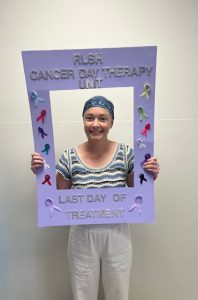 Jaime completed six months of chemotherapy, finishing in March 2025. Soon after, in April, she underwent a double mastectomy. But even before starting chemotherapy, she was thrown into the world of IVF.
Jaime and her husband had been together for 12 years and had spoken about having children, but not until later in their 30s. Suddenly, they were told this might not be an option because of the effects of chemotherapy. If they wanted to have children, they would need to freeze embryos immediately. Still in shock and trying to process the diagnosis, they made the quick decision to proceed with IVF. Jaime says this decision was made easier thanks to the Queensland Government’s improvements to financial accessibility for cancer patients, and the Federal Government’s Assisted Reproductive Technology Cryostorage program, which offers free cryostorage for cancer patients.
The IVF process involved regular appointments, ultrasounds, blood tests, endless needles, and an egg retrieval procedure followed by embryo freezing. Jaime also began receiving a monthly Goserelin injection to help reduce the effects of chemotherapy on her body and offer some hope of having children naturally without needing IVF.
When it came to planning her surgery, Jaime made the decision to transfer to a larger public hospital that offered not just breast surgeons, but plastic surgeons too. Organising the surgery within her oncologist’s recommended timeframe was a challenge, and something she had to fight and advocate for, but ultimately it was a decision she’s very glad she made. “Having both teams complete my surgery was the best decision, and something I’d recommend to anyone, especially others my age who want an aesthetic reconstruction,” she says.
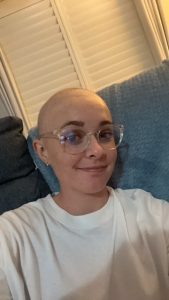
Jaime also found strength through the online cancer community. She reached out to others with similar experiences by posting in Cancer Chicks Australia for advice and spent time watching videos online to prepare herself for the procedure. Some members of the group kindly offered to send her photos of different mastectomy and reconstruction stages, which Jaime says helped make the whole process feel much less confronting.
Mentally, Jaime describes cancer as a rollercoaster. “There are good days and bad days,” she says. Early on, her psychologist explained that the stress of cancer is a whole different level, and compared it to living in a war zone, surviving an abusive relationship, or enduring a hostage situation. “These examples were very strong,” Jaime says, “but they resonated with me and validated my feelings.”
Taking things day by day and step by step, rather than looking at the whole picture or too far into the future, has significantly improved Jaime’s mental health since her diagnosis. She uses mindfulness and meditation techniques to stay present, rather than dwelling on the past or worrying about what might happen in the future.
Although the past year has been full of challenges, Jaime reflects with gratitude on the support she’s received from her husband, family, and close friends. Their encouragement, alongside her own determination to advocate for herself and stay focused on each step, has helped her navigate one of the toughest journeys of her life and move forward with hope for what comes next.